
Related Service
Explore Roof Replacement →
Roof Replacement in Killeen, TX
Upgrade to continuous ridge ventilation during your roof replacement.
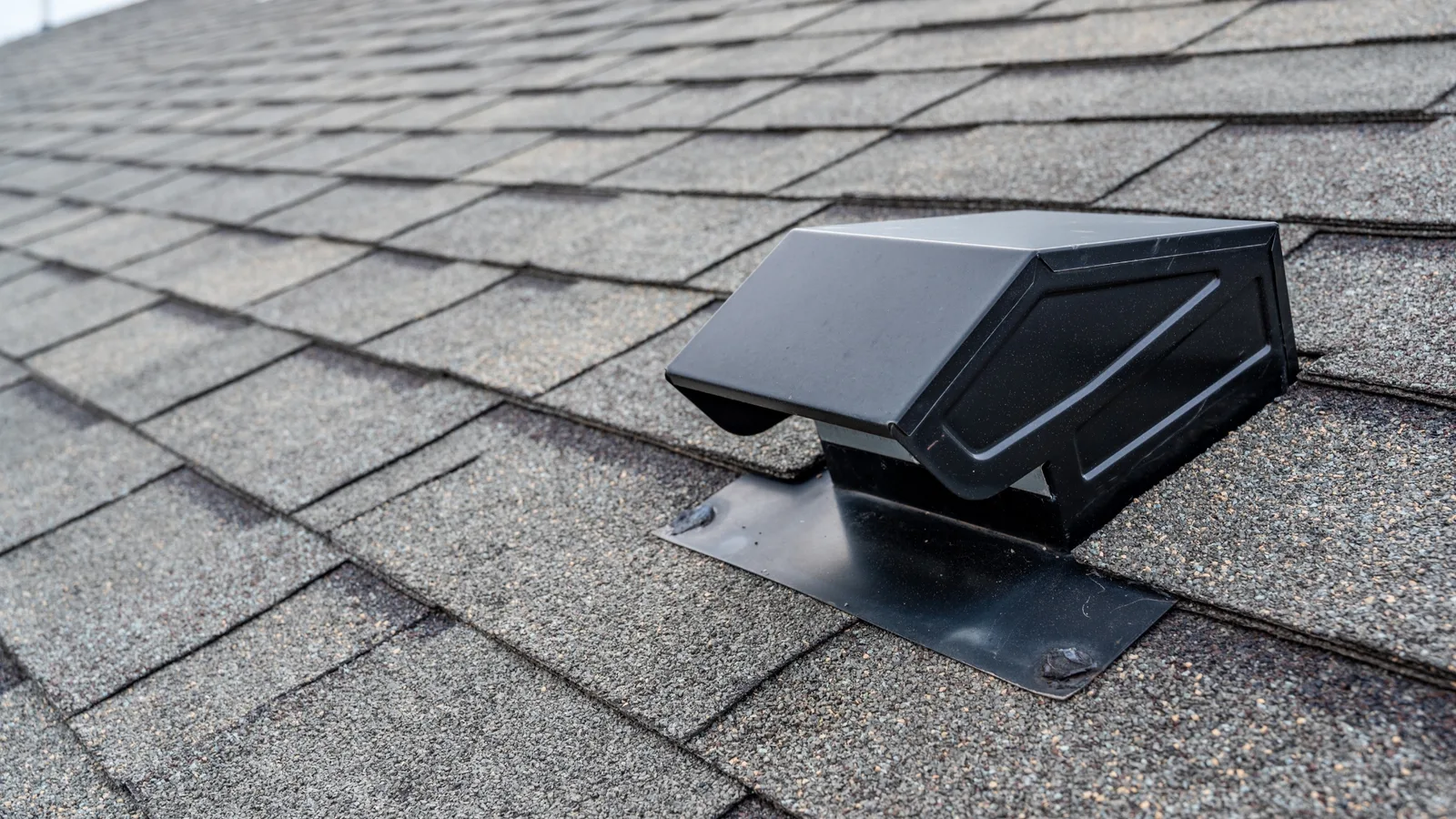
During Killeen's 100°F+ summers, an under-ventilated attic can reach 150°F to 160°F—cooking asphalt shingles from underneath, warping OSB decking, and forcing your AC system to run nonstop. Roof Killeen installs balanced ridge vents and soffit intake systems.
In Central Texas, intense solar heat is the #1 silent killer of residential roofs. From May through September, Bell County experiences dozens of days over 98°F. When radiant heat penetrates the roof plane and becomes trapped in a stagnant attic, temperatures inside the attic space climb to 150°F+. That trapped oven effect bakes the volatile oils out of asphalt shingles from below, dries out neoprene plumbing boots, delaminates OSB roof sheathing, and radiates heat down through ceiling insulation into your living spaces.
Whether we are performing a standalone ventilation upgrade or integrating new vents during a roof replacement in Killeen, Roof Killeen calculates your attic's square footage to engineer a balanced intake-and-exhaust system.
Watch for these common warning signs across Bell and Coryell County properties:
We coordinate every attic ventilation project in Killeen with complete flashing, underlayment, attic ventilation, and drainage checks. View our Residential Roofing hub or our Killeen city coverage guide.
Call (555) 010-0000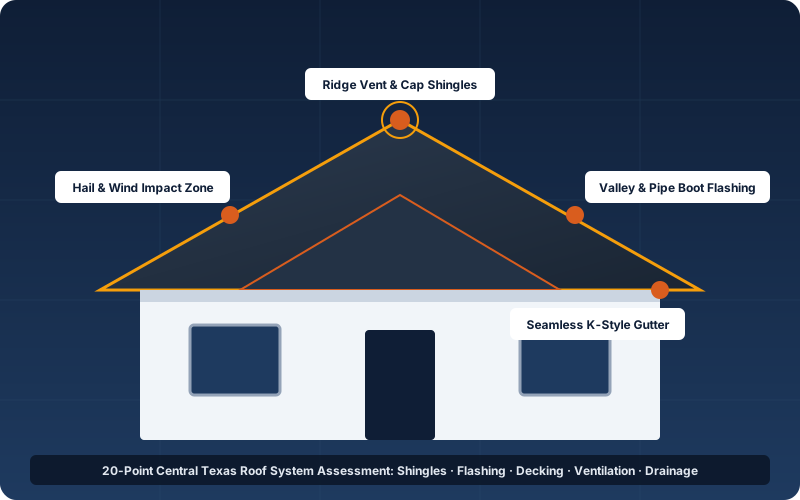
A continuous ridge vent runs along the entire horizontal peak of your roof. Because hot air naturally rises to the highest point of the attic, a baffled, external-wind-deflector ridge vent allows superheated air to escape evenly along the entire length of the roof truss system—eliminating hot dead-air pockets in corners and gables. The ridge vent is capped with matching architectural hip-and-ridge shingles for a clean, low-profile appearance.
Exhaust vents only work if an equal amount of cooler outside air can enter at the lowest point of the roof. We inspect your under-eave soffits, install perforated aluminum or vinyl soffit intake vents where needed, and add foam or cardboard rafter baffles (vent chutes) to keep attic insulation from blocking the airflow path.
On hip roofs with very short ridge lines where continuous ridge vent linear footage is limited, we install high-capacity static box vents (turtle vents), wind turbines, or thermostatically controlled solar/power attic exhaust fans—always ensuring we never mix incompatible exhaust types on the same attic space.
Every project follows a documented, predictable workflow from initial photo inspection to final magnetic cleanup.
We measure your attic footprint, calculate required Net Free Area (NFA), and inspect current soffit intake and roof exhaust.
We explain any airflow bottlenecks (such as blocked soffits or mixed vents) and provide a written estimate.
We cut a uniform air slot along the roof peak, install baffled ridge vents (or box/solar vents), and open soffit intake.
We cap the ridge vent with matching ridge shingles, seal all fasteners, and leave your property clean.
Attic ventilation upgrade costs depend on whether the work is performed during a full roof replacement (the most cost-effective time to cut in continuous ridge vents and replace box vents) or as a standalone retrofit, as well as the linear footage of ridge line and soffit intake work required.
We keep every roof inspection, repair, and replacement straightforward and documented.
We inspect your roof deck, shingles or panels, flashing, valleys, and vents at no charge and provide a digital photo report showing every finding clearly.
When active leaks or storm damage threaten your home, our 24/7 line ((555) 010-0000) prioritizes same-day tarping and stabilization.
If hail or wind caused your roof damage, we prepare organized photo documentation, measurement scopes, and meet your insurance adjuster on-site.
You receive a clear written estimate before work starts, and no payment is due until your attic ventilation project is completed and reviewed with you.
Air follows the path of least resistance. If you put a powered attic fan or turbine next to a ridge vent, the fan will pull air in through the nearby ridge vent at the top of the roof instead of drawing cool air up from the bottom soffits—leaving the lower two-thirds of your attic stagnant and hot.
Building codes (IRC) generally call for 1 square foot of Net Free Ventilation Area (NFVA) for every 150 square feet of attic floor space (or 1:300 when a balanced 50% soffit intake / 50% ridge exhaust system is installed).
Quality modern ridge vents feature internal weather baffles and external wind deflectors that use Bernoulli pressure to pull air out while blocking wind-driven rain from entering.
Upgrade to continuous ridge ventilation during your roof replacement.
Extend shingle service life by keeping roof deck temperatures down.
Free 20-point inspection including attic ventilation check.
Whether you spotted ceiling water stains after a thunderstorm, want a post-hail photo inspection report, or need a clear written estimate for a roof replacement, Roof Killeen makes the process straightforward.
Get a written estimate and photo inspection report. Or call (555) 010-0000 any time.
Thank you for contacting Roof Killeen. We have logged your inspection details and will reach out shortly to confirm your appointment window.
For urgent leaks or active storm damage, call our 24/7 line now at (555) 010-0000.