
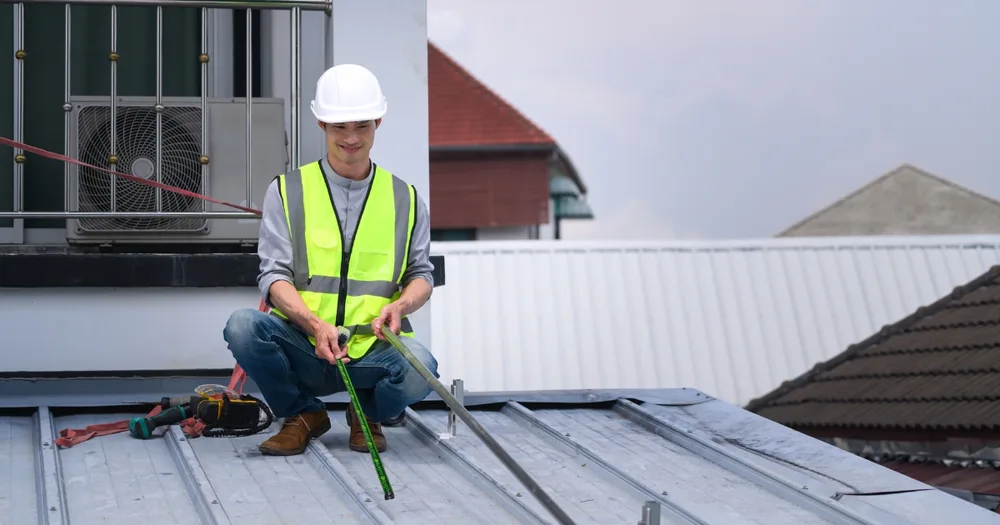
Homeowners researching roof replacement in Killeen, TX often see national cost averages that don't reflect Central Texas housing styles, wind-code nailing requirements, or Bell County storm realities. A single-story 1,400 sq. ft. ranch house in 76541 with a walkable 5/12 gable roof requires a completely different material and labor allocation than a 2,800 sq. ft. two-story home in 76542 with a 10/12 pitch, three dormers, and eight intersecting valleys.
As a local Killeen roofing contractor, Roof Killeen believes you should understand exactly how a replacement estimate is calculated before you ever sit down to review a quote.
1. 2026 Killeen Roof Replacement Estimate Ranges by Home Size
To translate your home's living area into actual roof size, remember that roofers add your garage, covered patios, eave overhangs, and a pitch slope multiplier (usually 1.12x to 1.30x). Below are typical estimate ranges only by roof size in Killeen, TX:
| Typical Home Footprint | Approx. Roof Size (Squares) | Architectural Shingles (Typical Estimate Range)* | Class 4 Impact Shingles (Typical Estimate Range)* | Standing Seam Metal (Typical Estimate Range)* |
|---|---|---|---|---|
| 1,000 – 1,300 sq. ft. Home (e.g., Central/North Killeen Ranch) |
14 – 18 Squares | $6,200 – $10,200 | $7,400 – $12,000 | $12,500 – $22,500 |
| 1,500 – 1,900 sq. ft. Home (e.g., Standard 3-Bed / 2-Car Garage) |
20 – 25 Squares | $8,400 – $14,200 | $9,800 – $16,800 | $17,500 – $31,000 |
| 2,000 – 2,500 sq. ft. Home (e.g., South Killeen / Trimmier Hip Roof) |
26 – 32 Squares | $10,800 – $18,200 | $12,600 – $21,500 | $22,500 – $40,000 |
| 2,600 – 3,200+ sq. ft. Home (e.g., Steep Two-Story / Bella Charca / Three Creeks) |
33 – 42+ Squares | $14,000 – $24,500+ | $16,500 – $28,500+ | $29,000 – $52,000+ |
*Note: All figures are typical ranges / estimates only. Exact pricing is determined by an on-site roof inspection and written scope.
2. How a Killeen Roof Replacement Budget Breaks Down
Where does the money actually go in a professional tear-off roof replacement? Understanding the cost anatomy helps you spot why "too-good-to-be-true" bids cut corners on hidden layers:
- Primary Roofing Materials & Waste Factor (approx. 40%–45%): Bundles of architectural or Class 4 shingles (3 bundles per square) or metal panels, plus 10% to 15% extra material for starter courses, hip-and-ridge caps, and diagonal valley cuts.
- Underlayment, Flashing, Vents & Accessories (approx. 15%–20%): High-temp synthetic underlayment, self-adhering ice-and-water valley membrane, painted eave/rake metal drip edge, valley metal, step flashing, lead or silicone plumbing vent boots, and continuous ridge vents. Low-bid contractors frequently skip drip edge, reuse rusted flashing, and install cheap rubber boots that crack in 5 years.
- Skilled Tear-Off, Installation Labor & Safety Staging (approx. 30%–35%): Stripping the old roof down to bare wood, inspecting and re-nailing decking, staging steep slopes safely, nailing shingles in the reinforced bond zone, and performing thorough magnetic nail sweeps.
- Debris Disposal, Dumpster & Decking Contingency (approx. 5%–10%): Hauling away 3 to 6 tons of old asphalt shingles and replacing any water-rotted OSB or plywood sheathing panels.
3. Hidden Cost Traps to Watch Out For When Comparing Quotes
- The "Overlay" Shortcut: If a quote is thousands lower than others, check whether it is an overlay (nailing over old shingles) rather than a full tear-off. Overlays trap Bell County summer heat and hide rotted wood decking.
- Reusing Old Plastic Vents & Rubber Pipe Boots: Old accessory boots will fail long before your new 30-year shingles do. Confirm that every pipe boot and vent is replaced with new hardware.
- Skipping Starter Strip Shingles: Cutting up 3-tab shingles backwards instead of using factory starter strips with continuous edge sealant leaves your eaves vulnerable to wind blow-off.
For a broader comparison across all roof types, see our Complete Killeen New Roof Cost Guide or schedule a free 20-point roof inspection.
Central Texas Field Checklist & Local Bell County Considerations
Because Killeen, Harker Heights, Copperas Cove, Belton, and Fort Cavazos sit at the intersection of the Blackland Prairie and the Lampasas Cut Plain, residential and commercial roofs here experience a combination of weather extremes that few other regions in the country face simultaneously. In spring (March through May) and autumn (October through November), dryline collisions trigger supercell thunderstorms with quarter- to golf-ball-sized hail and 60+ mph straight-line outflow gusts. Then, from June through September, sustained 98°F to 105°F afternoon temperatures heat dark roof decks above 155°F—baking volatile oils out of asphalt shingles, splitting standard rubber plumbing vent boots, and expanding metal panels every afternoon.
To protect your home investment and prevent avoidable interior water damage, our Killeen roofing team recommends reviewing these five practical homeowner action items every year:
- 1. Keep a Dated Digital Roof Folder: Store your initial 20-point roof inspection photo report, any repair invoices, and shingle/metal product specification sheets in one folder. If a major hailstorm strikes your Killeen ZIP code (76541, 76542, 76543, or 76549), having dated "before" photos proves your roof was well-maintained prior to the storm event.
- 2. Check Attic Intake & Exhaust Airflow Before Summer: Look up at your under-eave soffit vents from the outside and verify that attic insulation has not been blown over the intake openings inside the attic. Pairing open soffit intake with continuous shingle-over ridge vents lowers summer attic temperatures by 20°F to 30°F and prevents premature shingle baking.
- 3. Inspect Pipe Boots & Sealants at the 7-Year Mark: Builder-grade neoprene plumbing boots and exposed caulk joints around chimney counter-flashing rarely last the full lifespan of a 30-year architectural shingle roof in Texas sun. Replacing cracked rubber collars with UV-stable silicone or lead flashing boots stops the #1 source of non-storm bathroom ceiling leaks.
- 4. Clear Valleys & Seamless Gutters After Oak Leaf Drop: Live oak leaves, acorns, and cedar elm twigs accumulate in roof valleys and downspout outlets. Keeping seamless K-style gutters clear ensures torrential Central Texas downpours drain away from your fascia and slab-on-grade foundation.
- 5. Schedule a Free Professional Check Before Calling Insurance: Never guess from the ground or file a blind insurance claim after a storm. Call Roof Killeen at (555) 010-0000 for a free, no-obligation 20-point inspection and digital photo report so you have clear visual proof of your roof's condition.
Questions Homeowners Ask About This Topic
How many bundles of shingles does a typical Killeen house need?
Standard architectural shingles require 3 bundles per roofing square (100 sq. ft.). A 25-square Killeen roof requires 75 bundles for the field slopes, plus additional bundles for starter strips, hip and ridge caps, and a 10%–12% waste factor—totaling roughly 85 to 90 bundles.
Does a steep two-story roof cost more to replace than a one-story roof of the same square footage?
Yes. A two-story home with an 8/12 to 12/12 pitch has more actual sloped surface area per square foot of foundation footprint, and requires additional safety harness rigging, staging jacks, and labor time to load and install.
What if my roof replacement is part of a hail insurance claim?
If your roof replacement is approved under a hail or windstorm insurance claim, we review the carrier's scope of work to ensure all necessary code and manufacturer components (drip edge, starter strips, valley liner, ridge vents) are included, and you pay nothing until the replacement is completed.