
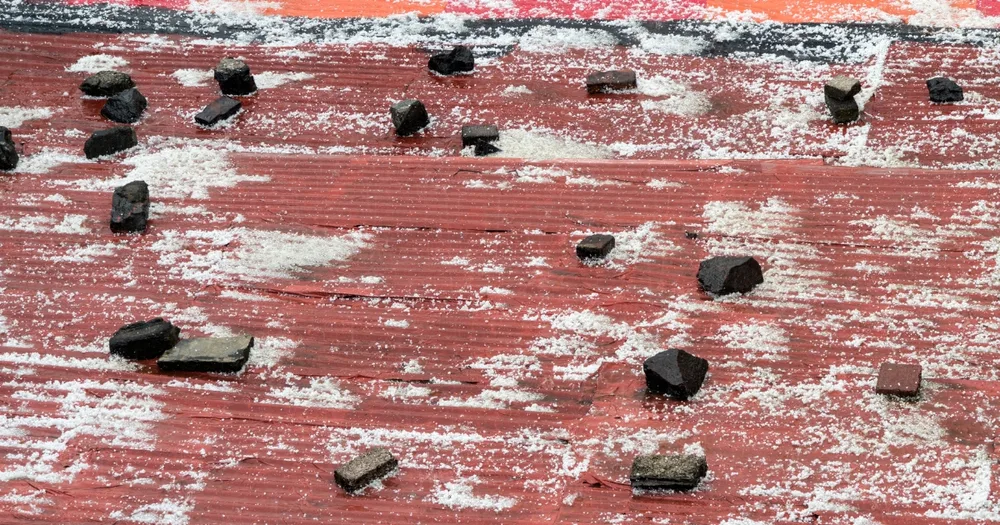
If you have lived in Killeen, Harker Heights, Belton, or Copperas Cove for more than a few years, you have seen neighborhood roofs replaced after spring supercells drop quarter- to golf-ball-sized hail. Standard architectural asphalt shingles are a great everyday roof, but standard oxidized asphalt becomes rigid over time—meaning a 1.25" to 1.50" hailstone impact can crack the fiberglass mat and crush granules into the shingle.
When you schedule a roof replacement in Killeen with Roof Killeen, one of the best upgrades to consider is a UL 2218 Class 4 impact-resistant shingle. Let's look at the engineering behind Class 4 ratings, SBS polymer-modified asphalt, and the financial math for Bell County homeowners.
1. What Does "UL 2218 Class 4" Actually Mean?
UL 2218 is the rigorous impact-resistance test standard conducted by Underwriters Laboratories. To test roofing materials, steel balls of increasing diameters are dropped from a height of 12 to 20 feet onto the most vulnerable parts of the installed shingle (edges, joints, and field areas) to simulate the terminal velocity kinetic energy of free-falling hail:
- Class 1: Withstands a 1.25-inch steel ball dropped from 12 feet.
- Class 2: Withstands a 1.50-inch steel ball dropped from 15 feet.
- Class 3: Withstands a 1.75-inch (golf-ball size) steel ball dropped from 17 feet.
- Class 4 (Highest Rating): Withstands two impacts in the exact same spot from a 2.00-inch (hen-egg size) solid steel ball dropped from 20 feet with zero cracking, splitting, or tearing visible on the front or back of the fiberglass mat.
2. How Class 4 Shingles Are Engineered: SBS Rubberized Asphalt vs. Mesh Backing
Manufacturers achieve UL 2218 Class 4 performance using two primary technologies:
A. SBS (Styrene-Butadiene-Styrene) Polymer-Modified ("Rubberized") Asphalt
Instead of using standard oxidized asphalt that dries out and turns brittle in Killeen's 100°F+ summer heat, SBS Class 4 shingles blend synthetic rubber polymers directly into the asphalt mix. That rubberized formulation gives the shingle three major advantages in Central Texas:
- Cushioned Hail Rebound: When a hailstone strikes an SBS shingle, the rubberized asphalt flexes slightly and rebounds without snapping the internal fiberglass mat.
- Superior Granule Retention: Ceramic granules are embedded in a tacky, rubberized asphalt bed that holds onto granules far tighter during hail impacts and heavy rain—preventing bald spots and UV burn-through.
- Thermal Flexibility in Heat & Cold Fronts: SBS shingles stay pliable during sudden Texas winter freezes and resist thermal cracking during 160°F rooftop summer afternoons.
B. Reinforced Polymer Mesh Backing
Other Class 4 shingles bond a high-tensile woven polymer fabric or mesh to the underside of the shingle. This backing acts like a trampoline net beneath the fiberglass mat, preventing hail impacts from splitting the back of the shingle and increasing nail-pull wind resistance.
3. Financial Math: Upgrade Cost vs. Texas Insurance Discounts
| Comparison Factor | Standard Architectural Shingles | UL 2218 Class 4 Impact Shingles |
|---|---|---|
| Typical Killeen Estimate Range (22–28 Sq. Home)* | $8,800 – $16,100 (estimate only) | $10,450 – $19,000 (estimate only) |
| Hail Impact Rating | Not impact-rated (bruises in 1.00"–1.25"+ hail) | UL 2218 Class 4 (tested to 2.00" steel ball impact) |
| Potential Texas Insurance Discount | None | Often 10%–25% off wind/hail premium portion (verify with your agent) |
| Avoided Deductible Risk | Higher risk of needing another $3,000–$6,000 deductible claim in next hailstorm | Significantly reduces likelihood of functional hail damage in moderate-to-severe storms |
Beyond potential annual premium credits, the biggest financial benefit of a Class 4 roof in Killeen is avoiding repeat wind/hail deductibles. With most Texas homeowners carrying a 1% or 2% deductible (often $3,500 to $7,000 out of pocket per claim), surviving a 1.5-inch hailstorm without needing a roof replacement pays for the Class 4 upgrade in a single storm cycle.
Central Texas Field Checklist & Local Bell County Considerations
Because Killeen, Harker Heights, Copperas Cove, Belton, and Fort Cavazos sit at the intersection of the Blackland Prairie and the Lampasas Cut Plain, residential and commercial roofs here experience a combination of weather extremes that few other regions in the country face simultaneously. In spring (March through May) and autumn (October through November), dryline collisions trigger supercell thunderstorms with quarter- to golf-ball-sized hail and 60+ mph straight-line outflow gusts. Then, from June through September, sustained 98°F to 105°F afternoon temperatures heat dark roof decks above 155°F—baking volatile oils out of asphalt shingles, splitting standard rubber plumbing vent boots, and expanding metal panels every afternoon.
To protect your home investment and prevent avoidable interior water damage, our Killeen roofing team recommends reviewing these five practical homeowner action items every year:
- 1. Keep a Dated Digital Roof Folder: Store your initial 20-point roof inspection photo report, any repair invoices, and shingle/metal product specification sheets in one folder. If a major hailstorm strikes your Killeen ZIP code (76541, 76542, 76543, or 76549), having dated "before" photos proves your roof was well-maintained prior to the storm event.
- 2. Check Attic Intake & Exhaust Airflow Before Summer: Look up at your under-eave soffit vents from the outside and verify that attic insulation has not been blown over the intake openings inside the attic. Pairing open soffit intake with continuous shingle-over ridge vents lowers summer attic temperatures by 20°F to 30°F and prevents premature shingle baking.
- 3. Inspect Pipe Boots & Sealants at the 7-Year Mark: Builder-grade neoprene plumbing boots and exposed caulk joints around chimney counter-flashing rarely last the full lifespan of a 30-year architectural shingle roof in Texas sun. Replacing cracked rubber collars with UV-stable silicone or lead flashing boots stops the #1 source of non-storm bathroom ceiling leaks.
- 4. Clear Valleys & Seamless Gutters After Oak Leaf Drop: Live oak leaves, acorns, and cedar elm twigs accumulate in roof valleys and downspout outlets. Keeping seamless K-style gutters clear ensures torrential Central Texas downpours drain away from your fascia and slab-on-grade foundation.
- 5. Schedule a Free Professional Check Before Calling Insurance: Never guess from the ground or file a blind insurance claim after a storm. Call Roof Killeen at (555) 010-0000 for a free, no-obligation 20-point inspection and digital photo report so you have clear visual proof of your roof's condition.
Questions Homeowners Ask About This Topic
Are Class 4 shingles hail-proof?
No roofing material is 100% 'hail-proof' against extreme baseball- or softball-sized supercell hail. Rather, Class 4 shingles are impact-resistant—engineered to survive common 1.00-inch to 2.00-inch Central Texas hailstorms without functional mat fractures that would ruin a standard shingle roof.
How do I get my homeowners insurance discount after installing a Class 4 roof in Killeen?
When {BRAND} installs a UL 2218 Class 4 shingle system, we provide the product documentation and completion certificate required for your Texas Department of Insurance (TDI) / carrier impact-resistance credit so you can submit it to your insurance agent.
Do Class 4 shingles look different from regular architectural shingles?
They have the same attractive dimensional wood-shake profile and color options as standard architectural shingles—the difference is inside the SBS rubberized asphalt formula and reinforced backing.