
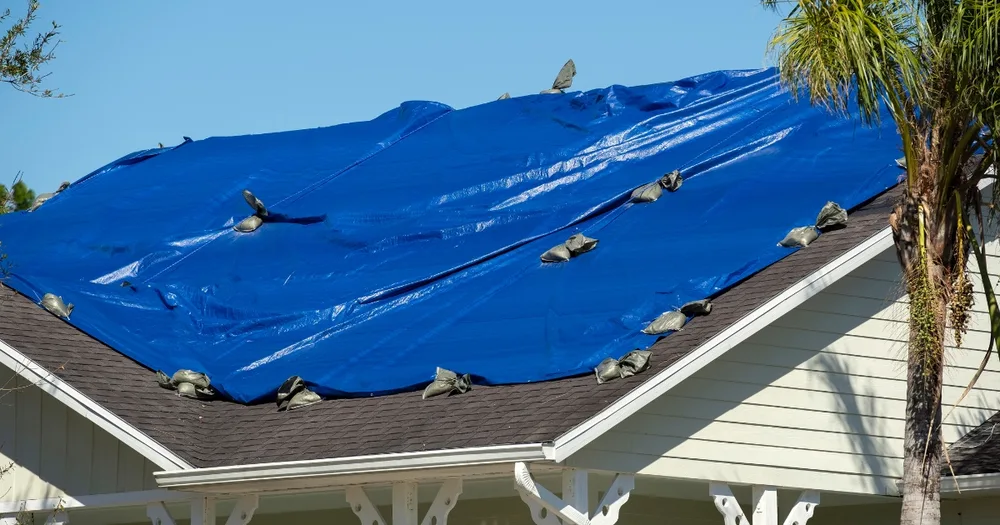
Severe weather in Killeen and Bell County often arrives in multi-day waves. A spring squall line or microburst that rips ridge caps and shingles off your roof on Tuesday evening is frequently followed by another round of heavy thunderstorms on Wednesday afternoon. Leaving exposed wood decking, torn underlayment, or a tree-limb puncture uncovered for even one follow-up rain shower can allow hundreds of gallons of water into your attic—soaking insulation, collapsing drywall ceilings, and warping hardwood or laminate floors below.
Here is the complete first-hours action guide from our Killeen roofing emergency team explaining how to protect your family and interior immediately, why DIY roof tarping is dangerous, and how professional storm tarping works with your insurance claim.
1. First-Hours Interior Safety & Water Mitigation Steps
- Step 1 — Check for Electrical Hazards First: Water follows ceiling joists and electrical conduit wires directly to recessed can lights, ceiling fans, and smoke detectors. If water is dripping from or near any electrical fixture, switch off that room's circuit breaker at your main panel immediately.
- Step 2 — Relieve Bulging Ceiling Drywall Blisters: When rainwater pools on top of ceiling drywall, latex paint stretches like a water balloon. Left alone, the entire 4x8 sheet of soaked drywall (weighing 60+ pounds) can suddenly crash down. Place a wide bucket on a tarp below the bulge, stand to the side, and poke a small drainage hole in the lowest point of the paint blister with a screwdriver or awl so the trapped water drains neatly into the bucket.
- Step 3 — Move Furniture & Photograph Interior Damage: Shift electronics, rugs, and furniture away from the drip zone, cover items with plastic painter's sheeting, and take clear photos of the ceiling stain, dripping water, and any blown-off shingles in your yard.
2. Why Homeowners Should Never Climb Onto a Storm-Damaged Roof
Every storm season in Central Texas, homeowners are seriously injured attempting to throw a hardware-store tarp onto a pitched roof. After a hailstorm or windstorm:
- Granule Loss Acts Like Ball Bearings: Loose ceramic granules washed onto pitched shingles make the roof surface as slippery as ice.
- Compromised Decking & Wet Underlayment: Wet OSB sheathing or branches hidden beneath a tarp can give way underfoot, and wet synthetic or felt underlayment offers zero traction.
- Gusts Turning Tarps into Sails: Holding a 20x30-foot polyethylene tarp on a ladder or roof ridge during a 25 mph post-storm breeze can easily pull a person off balance.
3. How Professional Batten-Anchored Roof Tarping Works
When our 24/7 emergency roof repair crew arrives at your Killeen home (as soon as active lightning and dangerous gales pass), we install a wind-resistant, watertight tarp assembly:
- Pre-Tarp Damage Photography: Before covering a single shingle, we photograph the exact storm damage from multiple angles on the roof. Your insurance adjuster needs these pre-tarp photos to verify what caused the breach.
- Over-the-Ridge Lapping (Never Exposing the Top Edge): If you simply nail a tarp in the middle of a sloped roof, rainwater running down the roof from above will flow right underneath the top edge of the tarp. We either carry the tarp completely up and over the roof ridge peak or tuck the top edge of the tarp underneath intact upslope shingle courses so water sheds on top of the tarp.
- 1x2 Furring Strip Batten Anchoring: Instead of throwing bricks, cinderblocks, or sandbags on the roof (which blow off and damage shingles), we roll the edges of the heavy-duty woven tarp around 1x2 wood furring battens and screw/nail through the battens to distribute wind load evenly along the perimeter.
4. Insurance Reimbursement for Emergency Roof Tarping
Under standard Texas homeowners insurance policies, policyholders are required to mitigate further damage after a storm, and insurance carriers reimburse reasonable emergency tarping expenses as part of a covered storm claim. We provide an itemized invoice and pre-tarp photo documentation packet that you can submit directly to your adjuster (see Insurance Claim Assistance).
Central Texas Field Checklist & Local Bell County Considerations
Because Killeen, Harker Heights, Copperas Cove, Belton, and Fort Cavazos sit at the intersection of the Blackland Prairie and the Lampasas Cut Plain, residential and commercial roofs here experience a combination of weather extremes that few other regions in the country face simultaneously. In spring (March through May) and autumn (October through November), dryline collisions trigger supercell thunderstorms with quarter- to golf-ball-sized hail and 60+ mph straight-line outflow gusts. Then, from June through September, sustained 98°F to 105°F afternoon temperatures heat dark roof decks above 155°F—baking volatile oils out of asphalt shingles, splitting standard rubber plumbing vent boots, and expanding metal panels every afternoon.
To protect your home investment and prevent avoidable interior water damage, our Killeen roofing team recommends reviewing these five practical homeowner action items every year:
- 1. Keep a Dated Digital Roof Folder: Store your initial 20-point roof inspection photo report, any repair invoices, and shingle/metal product specification sheets in one folder. If a major hailstorm strikes your Killeen ZIP code (76541, 76542, 76543, or 76549), having dated "before" photos proves your roof was well-maintained prior to the storm event.
- 2. Check Attic Intake & Exhaust Airflow Before Summer: Look up at your under-eave soffit vents from the outside and verify that attic insulation has not been blown over the intake openings inside the attic. Pairing open soffit intake with continuous shingle-over ridge vents lowers summer attic temperatures by 20°F to 30°F and prevents premature shingle baking.
- 3. Inspect Pipe Boots & Sealants at the 7-Year Mark: Builder-grade neoprene plumbing boots and exposed caulk joints around chimney counter-flashing rarely last the full lifespan of a 30-year architectural shingle roof in Texas sun. Replacing cracked rubber collars with UV-stable silicone or lead flashing boots stops the #1 source of non-storm bathroom ceiling leaks.
- 4. Clear Valleys & Seamless Gutters After Oak Leaf Drop: Live oak leaves, acorns, and cedar elm twigs accumulate in roof valleys and downspout outlets. Keeping seamless K-style gutters clear ensures torrential Central Texas downpours drain away from your fascia and slab-on-grade foundation.
- 5. Schedule a Free Professional Check Before Calling Insurance: Never guess from the ground or file a blind insurance claim after a storm. Call Roof Killeen at (555) 010-0000 for a free, no-obligation 20-point inspection and digital photo report so you have clear visual proof of your roof's condition.
Questions Homeowners Ask About This Topic
How fast can you tarp a leaking roof in Killeen, TX?
Call our 24/7 emergency roof line at (555) 010-0000. We prioritize active leaks for same-day emergency tarping across Killeen, Fort Cavazos, Harker Heights, and Copperas Cove as soon as lightning and high winds subside enough for safe roof access.
What if the insurance adjuster wants to look under the tarp?
When your insurance adjuster schedules their inspection, let us know! Our technician will meet the adjuster at your property, unfasten the tarp corner so they can inspect and photograph the damaged roof area directly, and then re-secure the tarp immediately.
How long does an emergency roof tarp last in Texas sun and wind?
A professionally batten-anchored heavy-duty tarp is designed to keep your roof dry for 30 to 90 days while your permanent roof repair or roof replacement is scheduled.